Zentangle patterns › Zentangle art › Owl
Zentangle®-Inspired Owl: Free Template and Step-by-Step Guide
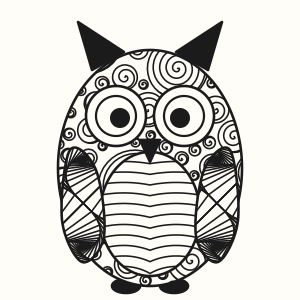
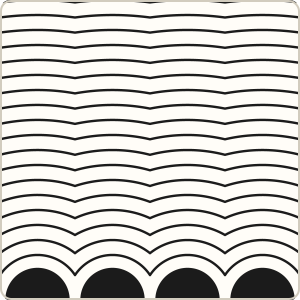
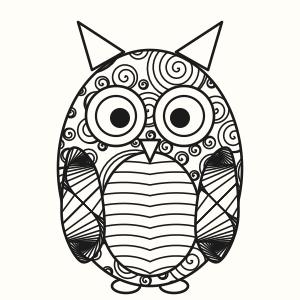
An owl is one of the most popular zentangle animals: a big egg-shaped body, two round eyes, wings on each side and a feathery belly. The belly takes Crescent Moon, which looks just like rows of feathers.
Part of our zentangle animals collection: 13 animals, each with a free template and a coloring page.
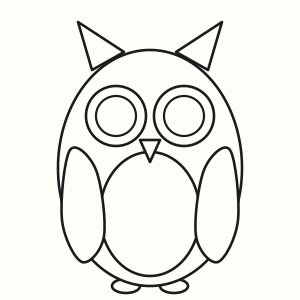
Draw the outline: an egg-shaped body, two ear tufts, two big round eyes with a ring inside, a beak, two wings, a belly and two feet.
Watch the owl fill up one section at a time, then print the blank template and tangle your own.
How to draw a zentangle owl, step by step
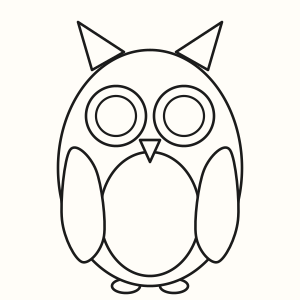 Step 1
Draw the outline: an egg-shaped body, two ear tufts, two big round eyes with a ring inside, a beak, two wings, a belly and two feet.
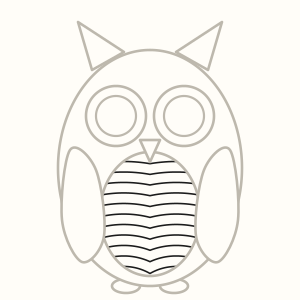 Step 2
Fill the belly with Crescent Moon, so it looks like feathers.
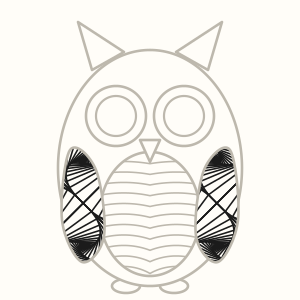 Step 3
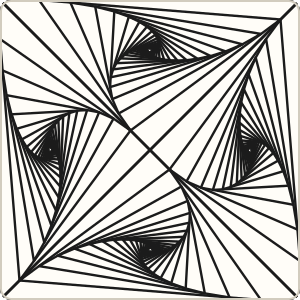
Fill both wings with Paradox.
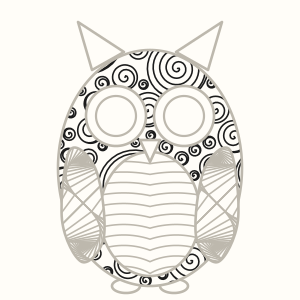 Step 4
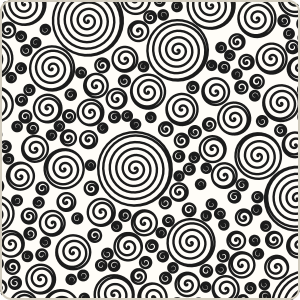
Fill the rest of the body with Printemps.
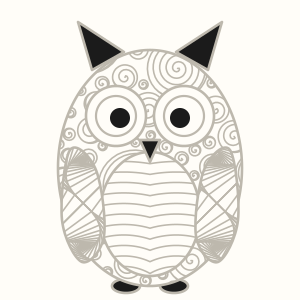 Step 5
Fill the ear tufts, beak, feet and pupils black.
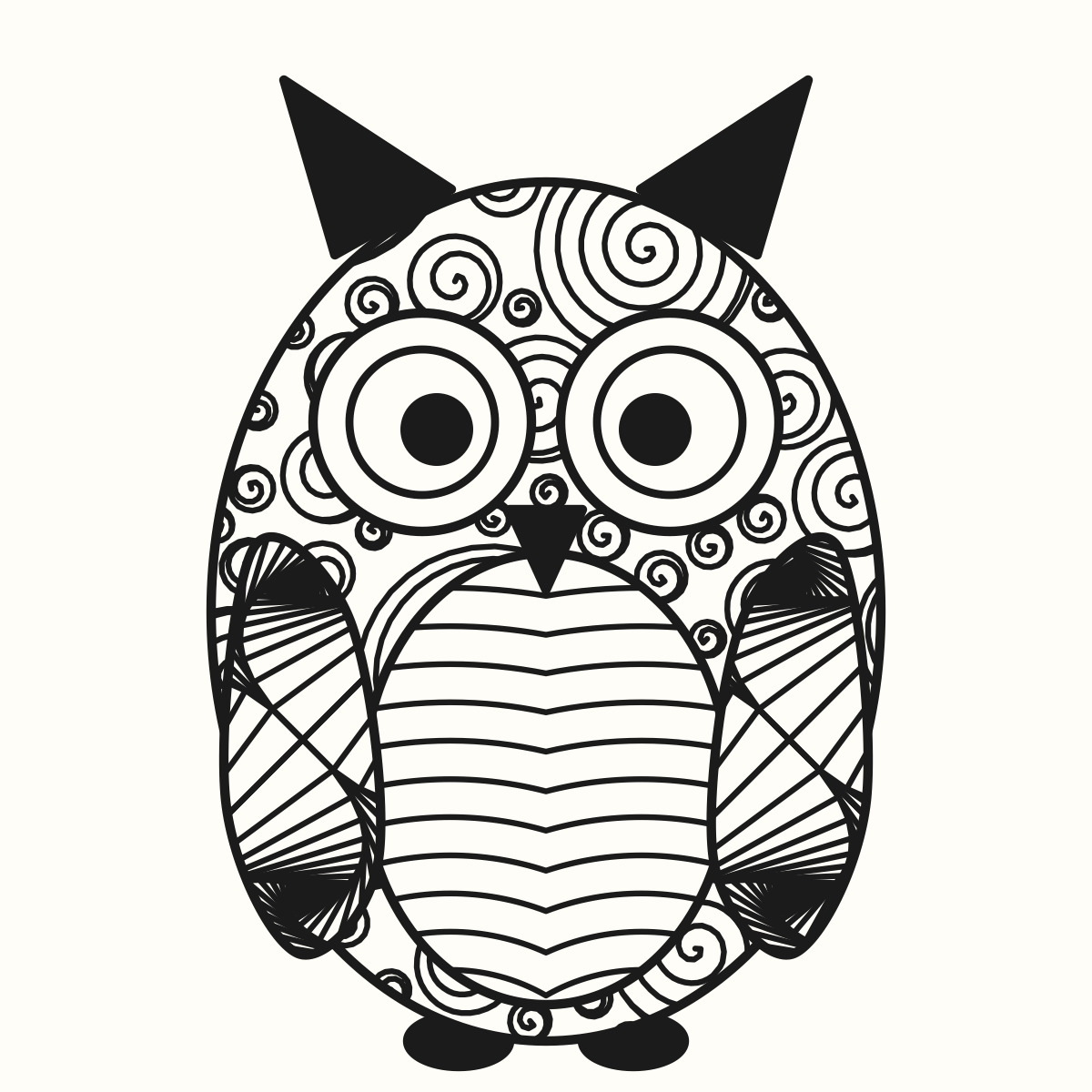
Tangles used in this owl
Each one has its own step-by-step page with an animation and a practice sheet. Learn them first, or swap in your favourites.
Ideas to make it your own
- Perch the owl on a branch and tangle the branch with Knightsbridge.
- Draw a family of owls in different sizes on one page.
- Leave the eyes white and colour the irises yellow or orange.
- Swap Printemps for Tipple for a speckled owl.
Tips for tangling a shape
- Draw the outline and strings in pencil first, then ink the outline. Pencil strings can stay; they disappear under the tangles.
- Put a dark tangle next to a light one so neighbouring sections stay easy to tell apart.
- Let each tangle stop at the section line. Turning the paper as you go makes this much easier.
- Finish with a little pencil shading along the section lines to give the shape depth.
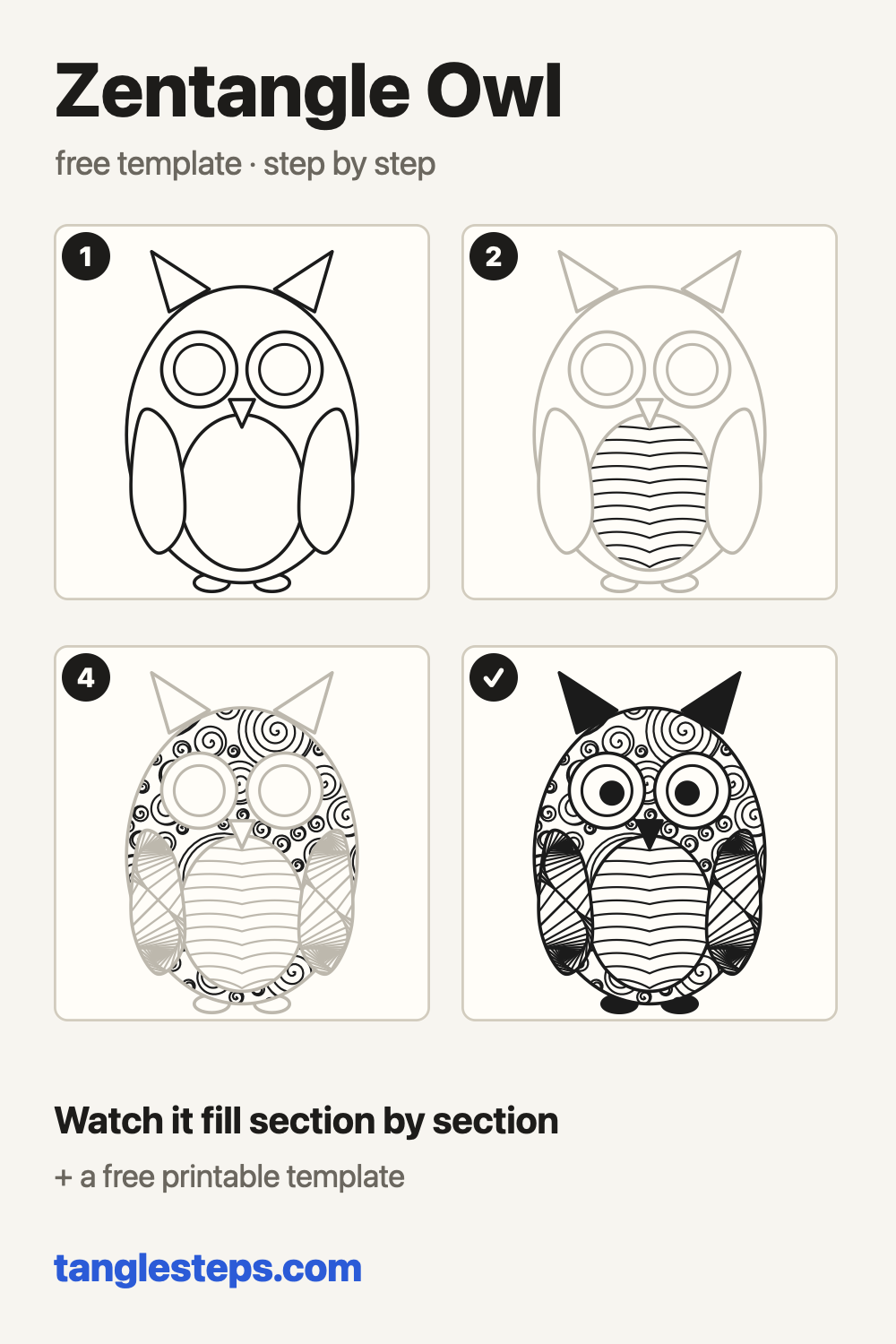
Zentangle owl step-out chart
All the steps on one image, handy for a sketchbook or a classroom wall.
Zentangle owl coloring page
Not in the mood to draw? Print the finished owl as a coloring page instead. The solid black parts are left open, so every section can take colour. Markers, coloured pencils and gel pens all work.
Questions
Why does an owl work so well for zentangle?
Its body already divides into clear sections (eyes, wings, belly), and feather textures match tangles like Crescent Moon and Paradox.
What should I do with the eyes?
Keep them plain: a ring and a black pupil. Busy eyes make the owl hard to read.
 Butterfly
 Turtle
 Fish
 Cat
 Elephant
 Bunny